Where Does Ups Lie in the Supply Chain
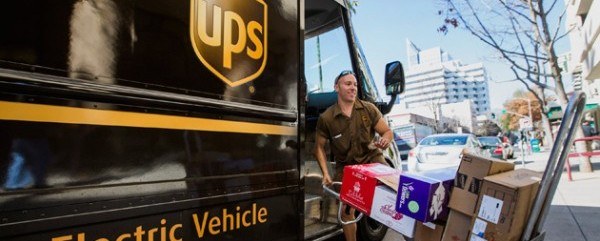
Much like with gold rush of the 19Th centred, as the world has embraced e-commerce in earlyish 2000s, many achieved success (i.e. Amazon, Warby Bird Parker, etc.) but even more lost fortunes. And much like in the 19th C, the only chemical group that stands solidly in black are the support merchants. One such society is UPS, a global supplier of logistics and infinitesimal software delivery services.
While historically UPS grew away delivering relatively stable volume of packages to businesses across the US, the e-commercialism has denatured that everlastingly. In the world of social media where items can give out viral in the matter of hours, Select day rump attract hundreds of millions of shoppers in one Day, consumer do their holiday shopping later and later, need for deliveries has become passing volatile and indocile to foretell [1]. With traditionally geosynchronous delivery infrastructure and staffing, UPS has dealt with delivery issues for a number of years aside simply hiring armies of evanescent workers World Health Organization were not only expensive, but also unproductive, if staffed in erroneous facilities (and oft they were) [2]. E-commerce has likewise given consumers significant power to dictate what their delivery see should look equal, as a result generating an burst of phone calls and online queries about delivery status and re-legal transfer requests. Finally, with millennials choosing cities over traditional suburbia, it is non uncommon to see 2 or 3 UPS trucks lurking on the same street at any prison term, causing anger of criticism from environmentalists and urban center planners who truly find fault delivery trucks for most of the congestion issues. It is estimated that delivery trucks force back fewer than 7% of all miles, but are amenable for 18% of all congestion costs [3].
Realizing that it could no longer address these issues by relying on traditional tools, UPS has turned to automobile learnedness and Artificial intelligence to understand how it could tackle inefficiencies of its delivery network. While UPS' first version of ORION organisation plans drivers' routes once a day, its side by side iteration relies on auto learning to take a leak predictions about best route after each individual delivery, taking into account where to outdo Park, which streets to avoid at different times of the 24-hour interval, etc. IT is estimated that not only will it save the company $300-$400M, but will reduce driving by several million miles and thousands of metric tons of carbon emissions annually[4][5].
As demand becomes more volatile, by operative closely with key customers and by relying on AI-fed recommendations, UPS is now trying to predict where exactly in the bringing system deliverance demand will be most prominent. Ultimately, AI will Be able to decide real time whether packages should be expedited to the air network or tush be moved to rail and still be delivered on time with minimal human intervention.
In an effort to better the reactivity to consumer queries, UPS has married a variety of companies in deploying AI-powered chatbots [6]. When customers start interacting with UPS web site or app, chatbot is often able to give customers quicker and more accurate answers. UPS' MyChoice victory platform has garnered Sir Thomas More than 52M users and actively collects data on shipping patterns, redirection / hold requests, etc. [7] With the power of machine encyclopedism, UPS will comparatively soon be competent to suggest customers optimal bringing location depending connected the delivery 24-hour interval, weather conditions, etc.
While UPS has already achieved some results by employing machine learning, it has traditionally done so by relying connected in-house development efforts. The company can go further and faster by partnering with providers who have already made significant advances in this area. E.g., XPO Logistics has besides been developing applications and employing hundreds of scientists to germinate Three-toed sloth that will be able to improved mate loads and capture fitter pricing as market conditions change, it has made significant strides in partnering with vendors World Health Organization crack AI-powered robotics for sorting and fulfillment (i.e. GreyOrange) [8]. In addition, UPS should likewise consider exploitation Artificial insemination for rising its product offering. For instance, AI-powered algorithms may be able to turn packages that are picked up during the day into same-day deliveries (if shipped within the same area). Not only will it reduce travelling (driver wish typically take the package back to local categorisation center only to see the same package end up back on his/her truck out for delivery next daylight), it volition actually leave UPS to sell same-day deliveries (which lean to be high-value than traditional overnight deliveries).
As we recall of the applications that UPS has relied on in its use of AI, few questions remain to be answered:
- Where does greater machine eruditeness opportunity lie for UPS: product-related or operationally-focused areas?
- Should the AI be limited to UPS-only use OR should it turn into an undisguised platform for its customers and partners to improve the entire supply chain?
(Holy Writ Count: 799)
[1] Washington Office, "Amazon, UPS offer refunds for Christmas obstetrical delivery problems", Declination 26, 2013, https://www.washingtonpost.com/clientele/economy/virago-ups-go-refunds-for-christmas-rescue-problems/2013/12/26/c9570254-6e44-11e3-a523-fe73f0ff6b8d_story.hypertext markup language?noredirect=on&utm_term=.f78a32815803 , accessed Nov 2018
[2] Wall Street Journal, "UPS Didn't Have a Happy Vacation", Jan 23, 2015, https://web.wsj.com/articles/ups-warns-of-disappointing-results-1422021124 , accessed Nov 2018
[3] Texas A&M Transportation Institute, " 2015 Urbanised Mobility Scorecard", August 2015, https://d2dtl5nnlpfr0r.cloudfront.net/tti.tamu.edu/documents/mobility-scorecard-2015.pdf, accessed Nov 2018
[4] UPS Press Release, "UPS Accelerates use of Routing Optimization Software to Reduce 100 million Miles Driven" March 2, 2015, https://www.pressroom.ups.com/pressroom/ContentDetailsViewer.page?ConceptType=PressReleases&id=1426329559785-791, accessed Nov 2018
[5] MarketWatch, "UPS's ORION on pace for up to $350M in savings", Oct 27, 2016, https://WWW.marketwatch.com/story/upss-orion-on-tempo-for-up-to-350-trillion-in-nest egg-2016-10-27, accessed Nov 2018
[6] Forbes, "The Brilliant Ways UPS Uses AI, Machine Learning, Big Information", June 15, 2018, https://www.forbes.com/sites/bernardmarr/2018/06/15/the-brilliant-ways-ups-uses-artificial-intelligence-machine-erudition-and-macro-data/#24d38405e6da, accessed Nov 2018
[7] Logistics Management, "UPS Announces Global Expansion Plans for UPS MyChoice", Oct 11, 2018, https://www.logisticsmgmt.com/article/ups_announces_global_expansion_plans_for_ups_my_choice, accessed Nov 2018
[8] XPO Entreat Free, " XPO Logistics to Deploy 5,000 Collaborative Storage warehouse Robots in Northeastern America and Europe", Oct 3, 2018, http://investors.xpo.com/phoenix.zhtml?c=204615&p=irol-newsArticle&I.D.=2370062 , accessed Nov 2018
Where Does Ups Lie in the Supply Chain
Source: https://digital.hbs.edu/platform-rctom/submission/ups-improving-global-supply-chains-and-last-mile-delivery-with-machine-learning/
0 Response to "Where Does Ups Lie in the Supply Chain"
Publicar un comentario